


Manufacturers Aren’t Losing Deals Because of Their Products
They’re losing them because of how they sell.
Across conversations with manufacturers — including at SUN 2026 — the pattern is clear:
The ERP works.
The products are strong.
But the customer experience around quoting, ordering, and service is breaking down.
The Shift: Buyer Expectations Have Outpaced ERP
Today’s manufacturing buyers behave very differently than they did even five years ago. According to Gartner:
-
70–80% research online before engaging sales
-
40–60% prefer to complete purchases digitally
At the same time, many buyers:
-
Don’t know exact part numbers or configurations
-
Want guidance, not friction
-
Often send drawings, specs, or samples instead of structured inputs
This creates a gap:
Your ERP is built to run your business.
It’s not built to deliver a modern buying experience.
Why Infor SyteLine Alone Isn’t Enough
Infor SyteLine is a powerful system of record.
But:
The buying journey stops where your internal systems stop.
As highlighted in Tarak Patel’s SUN session, the breakdown isn’t because ERP or CPQ fail —
it’s because the experience layer is missing.
What “Extending Infor SyteLine” Actually Means
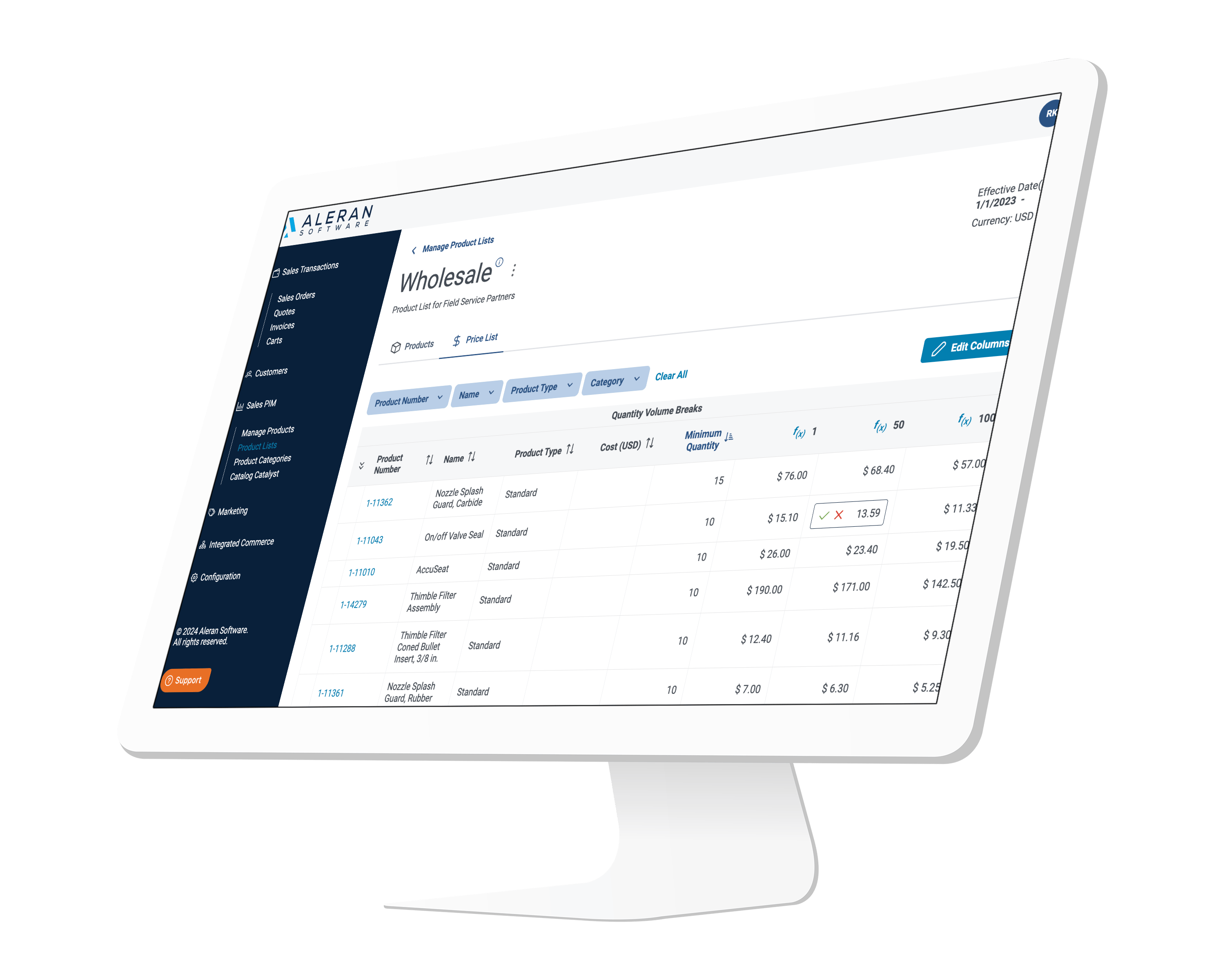
Extending SyteLine means adding a customer-facing experience layer that connects buyers, sales, and ERP data, includes:
-
Customer portals
-
Guided configuration
-
Digital quoting workflows
-
AI-assisted buyer experiences
What This Unlocks
-
Faster, more accurate quoting
-
Reduced back-and-forth
-
Increased average order value
-
Shorter sales cycles
-
Better customer experience
And critically:
The biggest opportunity is the aftermarket and service lifecycle — often the highest-margin and least digitized.
Frequently Asked Questions
What does it mean to extend Infor SyteLine?
Extending Infor SyteLine means adding customer-facing capabilities like portals, guided quoting, and digital sales workflows without replacing the ERP. SyteLine remains the system of record, while the experience layer improves how customers and sales interact with it.
Do we need to replace our ERP or CPQ to do this?
No. The goal is to extend, not replace. Manufacturers preserve their ERP and CPQ investments while adding a layer that improves customer experience and sales efficiency.
What is an Infor SyteLine customer portal?
A customer portal connected to SyteLine allows customers, dealers, or distributors to:
-
View quotes, orders, and invoices
-
Track order status
-
Reorder products
-
Access product and account information
It reduces reliance on email and manual follow-ups.
Can this work for complex or engineered-to-order products?
Yes. Modern approaches use guided configuration and quote-first workflows, allowing customers to:
-
Submit requirements, drawings, or specs
-
Receive guided assistance
-
Work with sales for final pricing and approval
This supports complexity without oversimplifying it.
How does AI help in extending SyteLine?
AI assists with:
-
Product discovery and recommendations
-
Configuration guidance
-
Pricing insights
-
Structuring incomplete product data
It supports sales rather than replacing it.
How long does it take to implement?
Modern solutions can typically be implemented in weeks, not quarters, with minimal IT lift, since they integrate with SyteLine rather than requiring heavy customization.
What are the biggest risks of not extending SyteLine?
-
Slower quoting and lost deals
-
Continued reliance on tribal knowledge
-
Poor customer experience
-
Missed aftermarket revenue opportunities
Data from our Built to Sell 2025 report shows:
-
86% of manufacturers lose deals due to slow quoting
-
Up to 15% annual revenue leakage from manual processes
The Bottom Line
Infor SyteLine isn’t broken.
But it wasn’t built for how buyers buy today.
Extending it with:
-
Customer portals
-
Digital sales workflows
-
AI-assisted experiences
Is how manufacturers stay competitive and grow.
Final Thought
The risk is no longer changing.
The risk is staying the same while your buyers move on.
Below are the five criteria manufacturers and their partners should prioritize when evaluating B2B commerce solutions built for manufacturing reality.
1. Lead With an ERP-First Integration Mindset (Not ERP Afterthoughts)
If it doesn’t extend your ERP cleanly, it isn’t truly designed for manufacturing commerce.
Manufacturers don’t sell in isolation. Pricing, availability, customer history, contracts, lead times, and fulfillment all live in ERP. The best B2B commerce platforms are designed to extend ERP safely, not duplicate it or work around it.
What to look for
-
Native ERP integration
-
Real-time or near-real-time access to:
-
order status and history
-
customer-specific pricing
-
item availability
-
-
Clear boundaries between:
-
ERP logic
-
customer experience
-
Why it matters
Platforms that treat ERP as “just a backend” often force IT into constant maintenance, custom code, and reconciliation work – especially after upgrades.
Related blog: Bridging the mid-market manufacturing digital divide to scale cost-effectively and efficiently
2. Support for Real Manufacturing Complexity (Not Just Products)
Manufacturing commerce is rarely about simple SKUs.
It involves:
-
configure-to-order
-
engineer-to-order
-
application-specific requirements
-
customer-specific rules and constraints
The best B2B commerce platforms don’t force manufacturers to oversimplify their products just to sell online.
What to look for
-
Rules-based configuration (not static catalogs)
-
Guided selling that knows when to:
-
allow self-service
-
route exceptions to engineering
-
-
Ability to standardize what can be standardized without breaking edge cases
Why it matters
Manufacturers that try to force generic eCommerce tools to handle complexity often end up right back at:
-
email
-
spreadsheets
-
manual quoting
Related blog: AI-guided sales for manufacturers just got easier and faster with Aleran suggestive selling
3. Lifecycle Commerce: Quote → Order → Reorder → Service
Most B2B commerce platforms focus heavily on the initial transaction.
Manufacturers know the real value comes after the order.
Aftermarket parts, consumables, service, upgrades, and reorders often represent 30–45% of annual revenue — and an even higher share of margin. Yet, post-order sales are often the most manual – and ripe for digital service.
What to look for
-
Customer portals with:
-
order history
-
reorder workflows
-
service visibility
-
-
Commerce that supports:
-
aftermarket and MRO
-
entitlement-based pricing
-
distributor and dealer models
-
Why it matters
If a platform stops at checkout, it leaves money on the table—and pushes service work back onto Sales and Customer Service teams.
Related blog: How B2B portals for manufacturers empower buyers, dealers and distributors with self-service ordering
4. IT Control, Security, and Governance by Design
For manufacturing, commerce decisions are IT decisions, whether teams admit it or not.
The best B2B commerce platforms make IT comfortable by design:
-
no ERP exposure via seamless integration
-
no uncontrolled logic duplication
-
no permanent custom builds
What to look for
-
Role-based access and security
-
Clear auditability
-
Configurable workflows vs. custom code
-
Ability to scale without turning IT into a product team
Why it matters
DIY portals and over-customized solutions often look cheap up front—and become long-term liabilities once security, upgrades, and maintenance are considered.
Related blog: Why you shouldn’t build your own self-service portals – the high cost of DIY
5. Speed to Value (Without Sacrificing the Future)
Manufacturers don’t have 18 months to “figure it out.”
At the same time, short-term wins can’t block long-term growth.
The best manufacturing commerce platforms support phased adoption:
-
start small
-
prove value
-
expand over time
What to look for
-
Fast initial launch (weeks, not years)
-
Affordable entry points (portals, reorder workflows)
-
Clear upgrade path to:
-
advanced configuration
-
CPQ
-
AI-guided selling
-
Why it matters
The manufacturers pulling ahead aren’t doing rip-and-replace projects. They’re modernizing incrementally—without disrupting operations.
Related reading: Built to Sell 2025: How manufacturers are modernization with digital commerce, AI and automation – without disruption.
A Final Word for Manufacturers and Their Partners
The “best” B2B commerce solution for manufacturing isn’t the one with the longest feature list.
It’s the one that:
-
respects ERP
-
understands complexity
-
supports lifecycle revenue
-
keeps IT in control
-
delivers value fast
That’s the difference between launching a commerce project—and building a sustainable digital selling engine.
Want a practical evaluation framework?
If you’re reassessing B2B commerce, portals, or quoting—and want help mapping these criteria to your current ERP and sales model—start with Built to Sell 2025, or explore how manufacturers are applying these principles in real-world deployments.
Let’s Talk
If you are reassessing how you sell, including quoting – or have questions to help assess your requirements, please send me a message at sales@aleran.com.
