



Manufacturers evaluating digital quoting and product configuration tools often run into confusion around two categories that sound similar — but solve very different problems:
- Sales CPQ (Configure, Price, Quote)
- CAD configurators and engineering configurators
In many organizations, these systems become blurred together because both involve product configuration.
But in practice, they serve different users, different workflows, and different stages of the quote-to-order process.
Understanding the distinction is critical because many manufacturers either:
- Overcomplicate sales quoting with engineering-heavy workflows
- Or oversimplify engineering complexity inside sales tools
The result is often:
- Slow quoting
- Sales bottlenecks
- Engineering overload
- Customer frustration
- ERP disconnects
- Long implementation cycles
In this guide, we’ll break down:
- What Sales CPQ actually does
- What CAD configurators actually do
- When manufacturers need one vs both
- How ERP-connected quoting strategies fit in
- Common mistakes manufacturers make during evaluation
What Is Sales CPQ?
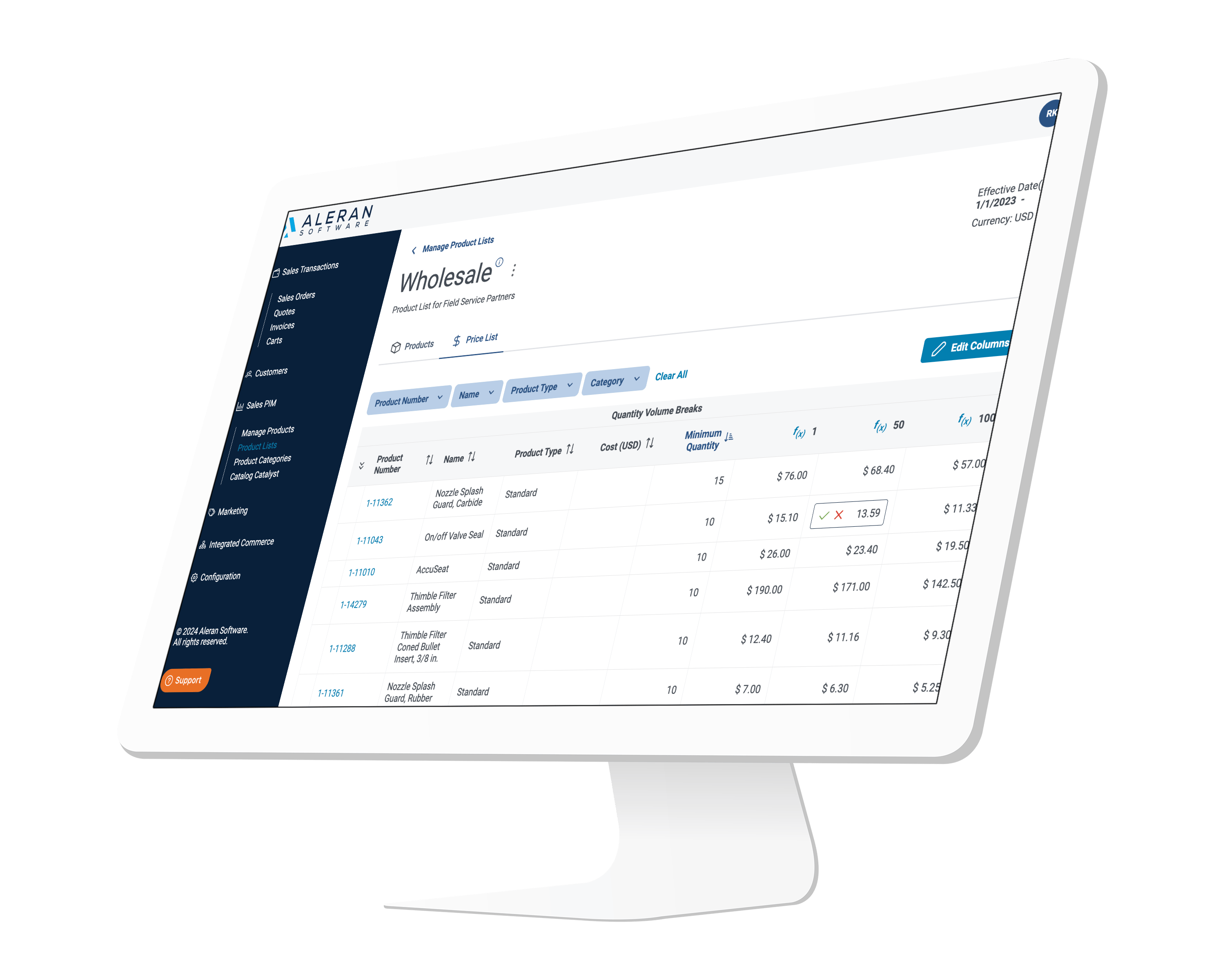
Sales CPQ (Configure, Price, Quote) software helps sales teams, dealers, distributors, and customers configure products and generate accurate quotes faster.
The focus of Sales CPQ is commercial selling workflows — not engineering design.
A manufacturing CPQ platform typically supports:
- Guided selling
- Product selection
- Pricing logic
- Discount rules
- Quote generation
- Approval workflows
- Dealer and distributor quoting
- Customer self-service quoting
- Quote-to-order workflows
- ERP-connected pricing and availability
The primary goal is helping manufacturers quote and sell complex products faster while reducing manual work and pricing inconsistencies.
What Is a CAD Configurator?
CAD configurators are engineering-focused systems used to create or modify technical product designs and specifications.
These tools are often connected to:
- CAD systems
- Engineering BOMs
- Technical drawings
- Manufacturing specifications
- Product design workflows
A CAD configurator may generate:
- 2D drawings
- 3D models
- Engineering outputs
- Technical documentation
- Manufacturing instructions
The primary goal is ensuring technically valid product designs for manufacturing and engineering execution.
The Biggest Difference: Commercial Configuration vs Engineering Configuration
This is where many manufacturing teams get stuck.
Sales CPQ focuses on:
“Can we quote and sell this efficiently?”
CAD configurators focus on:
“Can we engineer and manufacture this correctly?”
Those are related — but not identical — problems.
When Manufacturers Need Sales CPQ
Manufacturers typically need Sales CPQ when:
- Quotes take too long
- Pricing is inconsistent
- Sales depends heavily on tribal knowledge
- Dealers need self-service quoting
- Customer-specific pricing is complex
- Sales teams rely on spreadsheets
- Customers want configure-to-quote experiences
- ERP pricing and quoting workflows are disconnected
Sales CPQ is especially valuable for manufacturers with:
- Configure-to-order products
- Dealer/distributor sales channels
- Aftermarket sales
- Customer-specific pricing
- High quote volume
- Lean sales operations teams
In many cases, the goal is not engineering automation.
The goal is accelerating quote-to-order workflows.
When Manufacturers Need CAD Configurators
Manufacturers typically need CAD configurators when:
- Engineering rules are highly complex
- Products require detailed technical drawings
- Configurations impact manufacturing specifications
- Engineering BOM generation is required
- Products are highly engineered-to-order
- Custom design validation is critical
Industries that commonly rely heavily on CAD configurators include:
- Industrial equipment
- Heavy machinery
- Custom fabrication
- Engineered systems
- Aerospace
- Complex manufacturing assemblies
In these environments, engineering configuration accuracy becomes mission critical.
When Manufacturers Need Both
Many manufacturers actually require both Sales CPQ and CAD configuration workflows working together.
A common modern approach looks like this:
Sales CPQ handles:
- Guided selling
- Dealer/customer quoting
- Commercial configuration
- Pricing
- Self-service workflows
- Quote approvals
CAD configuration handles:
- Engineering validation
- Technical drawings
- Manufacturing specifications
- Engineering BOM generation
- Production-ready outputs
The key is ensuring these workflows remain connected rather than forcing engineering-heavy processes into every sales interaction.
The Hidden Problem: Engineering Bottlenecks in Sales
One of the biggest operational issues manufacturers face is routing too many quoting requests through engineering teams.
That often happens when:
- Sales lacks configuration tools
- Product knowledge lives inside engineering
- Configuration logic is undocumented
- ERP and quoting systems are disconnected
The result:
- Engineering becomes a sales bottleneck
- Quotes slow down
- Customers wait longer
- Dealers become frustrated
- Revenue gets delayed
Modern Sales CPQ strategies help manufacturers reduce unnecessary engineering involvement during early-stage commercial quoting.
ERP Connectivity Matters More Than Most Manufacturers Realize
Whether manufacturers implement Sales CPQ, CAD configurators, or both, ERP connectivity becomes critical.
Disconnected systems often create:
- Duplicate product logic
- Pricing inconsistencies
- Manual order entry
- Data synchronization issues
- Delayed quote-to-order workflows
Manufacturers should evaluate how configuration workflows connect to:
- ERP pricing
- inventory
- customer records
- product data
- order management
- operational workflows
The goal is not simply configuration.
The goal is connected quote-to-order execution.
Common Mistakes Manufacturers Make
Mistake #1: Trying to Force CAD Workflows Into Sales Quoting
Engineering systems are often too complex for day-to-day sales and dealer workflows.
Mistake #2: Oversimplifying Engineering Requirements
Some products genuinely require engineering-level validation.
Mistake #3: Ignoring Dealer and Customer Experience
Manufacturers increasingly need self-service quoting and guided buying experiences.
Mistake #4: Treating CPQ as Only a Sales Tool
Modern CPQ increasingly connects sales, customer experience, dealer workflows, and ERP-connected commerce.
Mistake #5: Evaluating Systems in Isolation
Configuration workflows should align with ERP, quoting, ordering, and customer portal strategies.
The Shift Toward ERP-Connected Configure-to-Quote
Manufacturers are increasingly moving toward ERP-connected configure-to-quote strategies that combine:
- Sales CPQ
- Customer portals
- Dealer self-service
- ERP-connected pricing
- Guided selling
- AI-assisted recommendations
- Engineering validation workflows where needed
The focus is shifting from standalone quoting tools toward connected customer-facing sales experiences.
Final Thoughts
Sales CPQ and CAD configurators are not interchangeable.
They solve different problems for different teams.
Manufacturers evaluating configuration strategies in 2026 should focus first on understanding:
- who needs to configure products
- what level of engineering validation is required
- where quoting bottlenecks exist
- how workflows connect back to ERP
For many manufacturers, the right answer is not choosing one or the other.
It is creating a connected strategy where sales, dealers, customers, engineering, and ERP systems work together without slowing down the buying process.
Let’s Talk
If you’re considering how to change how you quote and sell or how you deliver customer experience to your buyers, let’s connect.
👉 See how Aleran extends Epicor real time by scheduling time with us.
Related Resources
The manufacturers pulling ahead aren’t doing rip-and-replace projects. They’re modernizing incrementally—without disrupting operations.
Related reading: Why Manufacturing Digital Commerce Fails (And Hhow to Fix It Across the Full Customer Lifecycle)
Common FAQs
What is the difference between CPQ and CAD configurators?
CPQ focuses on commercial quoting and sales workflows, while CAD configurators focus on engineering design and technical product validation.
Do manufacturers need both CPQ and CAD configurators?
Some manufacturers require both. Sales CPQ handles quoting and selling workflows, while CAD configurators support engineering and manufacturing outputs.
What industries commonly use CAD configurators?
Industries with highly engineered or custom products, including industrial equipment, machinery, aerospace, and engineered systems manufacturing.
What does manufacturing CPQ software do?
Manufacturing CPQ software helps sales teams, dealers, and customers configure products, generate pricing, and create accurate quotes faster.
Why is ERP connectivity important for CPQ?
ERP connectivity helps synchronize pricing, inventory, customer records, and quote-to-order workflows across systems.
