


Manufacturers using Infor SyteLine often reach the same turning point:
Their ERP works well operationally.
But dealers, distributors, and customers still struggle to do business with them digitally.
Quotes take too long. Order visibility is fragmented. Customer service teams are buried in emails. Dealers cannot easily reorder products, check invoices, track shipments, or configure complex products without calling someone internally.
And many manufacturers assume fixing this requires a massive ERP replacement or waiting until after a migration project.
It doesn’t.
The most effective manufacturers are extending their ERP with a modern customer portal layer designed specifically for dealer and distributor experiences.
Here’s how to build an Infor SyteLine customer portal that actually works — both for your customers and your internal teams.
Why Most Manufacturing Portals Fail Dealers
Many customer portals fail because they were designed around internal systems instead of customer workflows.
Dealers and distributors do not care how your ERP is structured.
They care about speed, visibility, and ease of doing business.
Most legacy portals struggle because they:
- Require too many clicks
- Lack real-time ERP data
- Do not support customer-specific pricing
- Cannot handle complex quoting
- Force users into manual workarounds
- Offer poor mobile experiences
- Create disconnected experiences between sales, service, and ecommerce
In many cases, manufacturers also bolt together multiple disconnected tools:
- Ecommerce platform
- Separate CPQ
- Static portal
- CRM workflows
- Spreadsheet-driven approvals
The result becomes more complexity — not less.
What Dealers Actually Need from a Customer Portal
The best dealer portals simplify the entire buying and service experience.
Modern manufacturing customers increasingly expect the same level of digital convenience they experience elsewhere in B2B commerce.
That includes:
Real-Time Order Visibility
Dealers want immediate answers to:
- Where is my order?
- Has it shipped?
- What inventory is available?
- What is my ETA?
If users still need to email customer service for updates, the portal is failing.
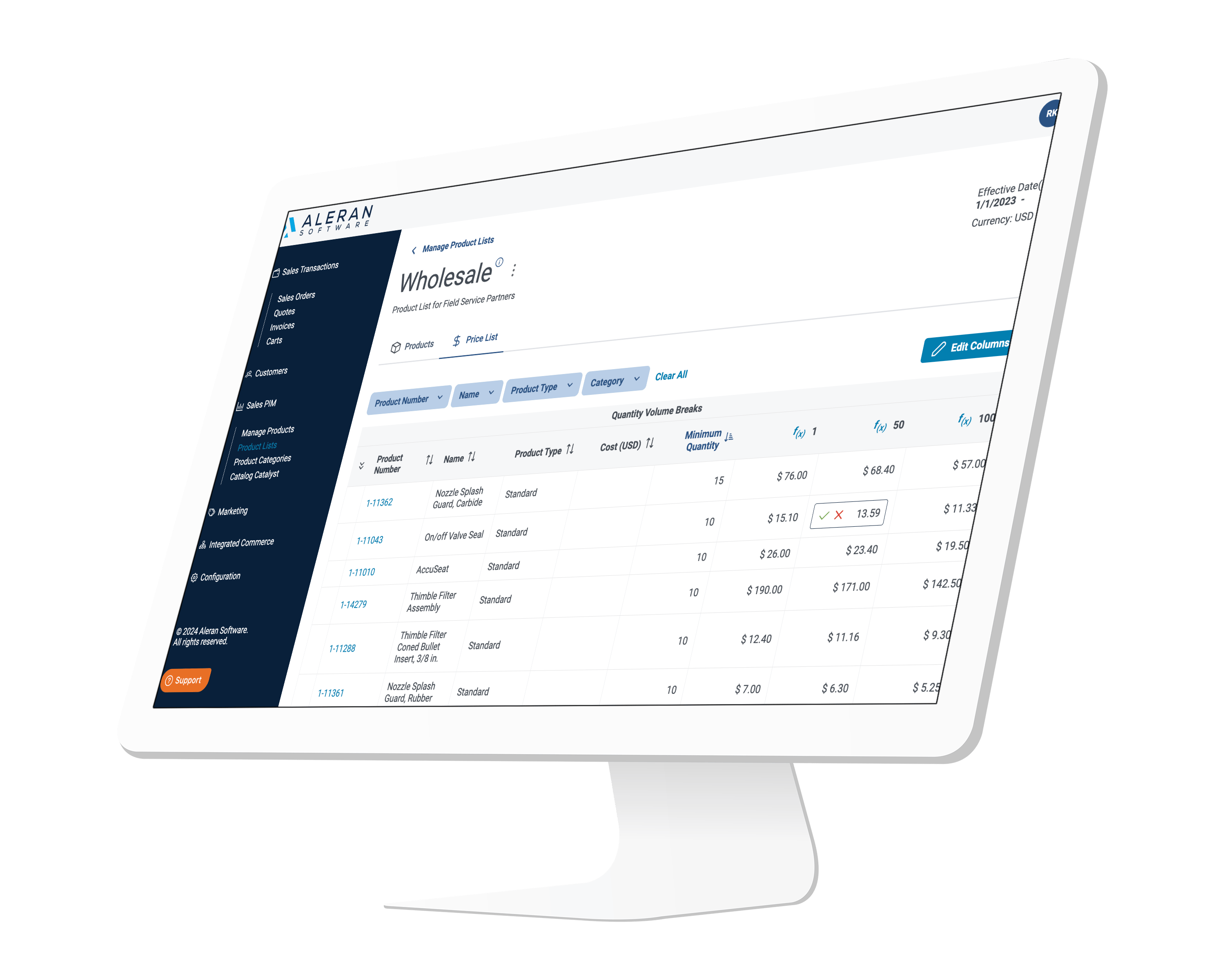
Customer-Specific Pricing
Manufacturing pricing is rarely simple.
Dealers often require:
- Contract pricing
- Tiered pricing
- Territory pricing
- Promotions
- Volume discounts
- ERP-driven pricing rules
A portal disconnected from SyteLine pricing data quickly becomes inaccurate and unusable.
Self-Service Reordering
Many manufacturers generate significant repeat revenue from aftermarket parts and repeat purchasing.
Dealers need:
- Saved order history
- Quick reorder functionality
- Shopping lists
- Part lookup
- Invoice visibility
- Easy access to frequently purchased items
The easier reordering becomes, the more revenue shifts digitally.
Guided Selling and Quoting
Many industrial products require configuration.
That means portals increasingly need:
- Lightweight CPQ
- Product rules
- Guided configuration
- Compatibility logic
- Approval workflows
Without this, sales teams become bottlenecks.
Why Infor SyteLine Alone Isn’t Enough for Modern Customer Experience
Infor SyteLine is extremely strong operationally.
It manages:
- Manufacturing operations
- Inventory
- Pricing
- Orders
- Financials
- Supply chain workflows
But ERPs were not originally designed to deliver modern digital buying experiences.
That is why manufacturers often struggle with:
- Dealer self-service
- Mobile experiences
- Ecommerce workflows
- Personalized buying experiences
- AI-driven recommendations
- Modern UX expectations
The answer is not replacing SyteLine.
The answer is extending it.
The Best Approach: Extend SyteLine Instead of Replacing It
The most successful manufacturers treat SyteLine as the operational system of record while layering modern digital commerce and portal capabilities on top.
This approach allows manufacturers to:
- Preserve ERP investments
- Reduce disruption
- Avoid replatforming risk
- Modernize faster
- Improve dealer experience incrementally
Instead of rebuilding core ERP logic, the portal consumes and surfaces ERP data intelligently.
That means:
- Real-time pricing
- Real-time inventory
- Order synchronization
- Customer-specific experiences
- Faster implementation timelines
This is particularly important for mid-market manufacturers that do not have large IT teams available for massive custom development projects.
Core Features Every Dealer Portal Should Include
A modern dealer portal for Infor SyteLine should include:
Dealer Account Management
- Role-based permissions
- Multiple users by account
- Approval workflows
- Customer-specific catalogs
Order Management
- Order history
- Shipment tracking
- Invoice access
- Returns workflows
- Saved carts
ERP-Connected Pricing
- Contract pricing
- Promotions
- Customer-specific pricing
- Real-time updates
Self-Service Commerce
- Product search
- Mobile friendly ordering
- Quick reorder
- Inventory visibility
Quoting & CPQ
- Configure-to-order support
- Guided workflows
- Approval routing
- Quote-to-order conversion
Service & Support
- Warranty visibility
- Service requests
- Documentation access
- Knowledge base integration
How to Connect a Customer Portal to Infor SyteLine
The best architectures are API-first and ERP-connected.
That means the portal should integrate directly with:
- Customer records
- Pricing
- Inventory
- Orders
- Shipment status
- Invoice data
The goal is not to duplicate ERP logic.
The goal is to orchestrate customer-facing experiences around ERP data.
Manufacturers should prioritize platforms that:
- Support Infor CSI/SyteLine integrations
- Reduce custom code
- Allow extensibility
- Support future AI capabilities
- Enable both ecommerce and portal experiences in one platform
This becomes especially important during ERP upgrades or cloud migrations.
A modern portal layer can continue forward even while backend ERP modernization evolves over time.
Top 4 Common Customer Portal Mistakes Manufacturers Make
1. Waiting for ERP Migration Completion
Many teams delay customer experience modernization because of ERP migration projects.
That often means years of lost revenue opportunities and customer frustration.
Modernization can happen in parallel.
2. Treating Ecommerce and Portals as Separate Strategies
For manufacturers, dealer portals and ecommerce increasingly overlap.
Customers expect one connected experience.
3. Over-Customizing
Heavy customization increases long-term maintenance costs and slows innovation.
Modern platforms should allow configuration and extensibility without rebuilding everything.
4. Ignoring Mobile Experience
Many dealers order from warehouses, service trucks, production floors, or field locations.
Mobile usability matters.
What Success Looks Like
When manufacturers implement the right dealer portal strategy, they often see:
- Faster quoting
- Higher dealer satisfaction
- Increased digital ordering adoption
- Reduced customer service workload
- Higher average order value
- Faster reorder cycles
- Better visibility across sales and operations
Most importantly, they make it easier for customers to buy.
And in manufacturing, ease of doing business increasingly becomes a competitive differentiator.
Final Thoughts: The Future of Dealer Self-Service
Manufacturers using Infor SyteLine do not need to replace their ERP to modernize customer experience.
But they do need to rethink how dealers and distributors interact with the business digitally.
The future belongs to manufacturers that can:
- Simplify quoting
- Enable self-service
- Surface real-time ERP data
- Reduce friction
- Support dealers digitally without increasing internal complexity
The right customer portal does not replace SyteLine.
It unlocks more value from it.
Let’s Talk
If you’re considering how to change how you quote and sell or how you deliver customer experience to your buyers, let’s connect.
👉 See how Aleran extends Infor SyteLine real time by scheduling time with us.
Related Resources
The manufacturers pulling ahead aren’t doing rip-and-replace projects. They’re modernizing incrementally—without disrupting operations.
Related reading: The Hidden Cost of Bolt-Ons to Infor SyteLine: Why Manufacturers Outgrow Disconnected CPQ, Portals and Commerce
