



Manufacturers running Epicor are under increasing pressure to modernize how customers, dealers, distributors, and sales teams quote, order, reorder, and self-serve online.
For many, Epicor Commerce Connect (ECC) was an early step toward digital commerce. But as manufacturers evolve, many are reevaluating whether ECC still aligns with their long-term goals around customer experience, dealer enablement, self-service, CPQ, AI-guided selling, and ERP-connected commerce.
That does not mean replacing Epicor ERP itself.
In fact, many manufacturers are looking for ways to extend Epicor Kinetic while modernizing the customer-facing buying experience around it.
In this guide, we’ll break down:
- Why manufacturers are exploring Epicor Commerce alternatives
- What modern manufacturing commerce platforms should support in 2026
- The hidden costs of disconnected bolt-ons and custom portals
- What to evaluate before selecting an alternative
Why Manufacturers Explore Alternatives to Epicor Commerce (ECC)
For many manufacturers, the challenge is not ERP.
The challenge is everything customer-facing around the ERP.
Most manufacturing ERPs — including Epicor — were designed primarily to manage:
- operations
- inventory
- production
- finance
- fulfillment
They were not originally designed to serve as modern customer buying experiences.
As manufacturers grow, common pain points begin appearing:
- Slow or manual quoting
- Dealer and distributor friction
- Customer service overload
- Heavy reliance on email and spreadsheets
- Limited self-service capabilities
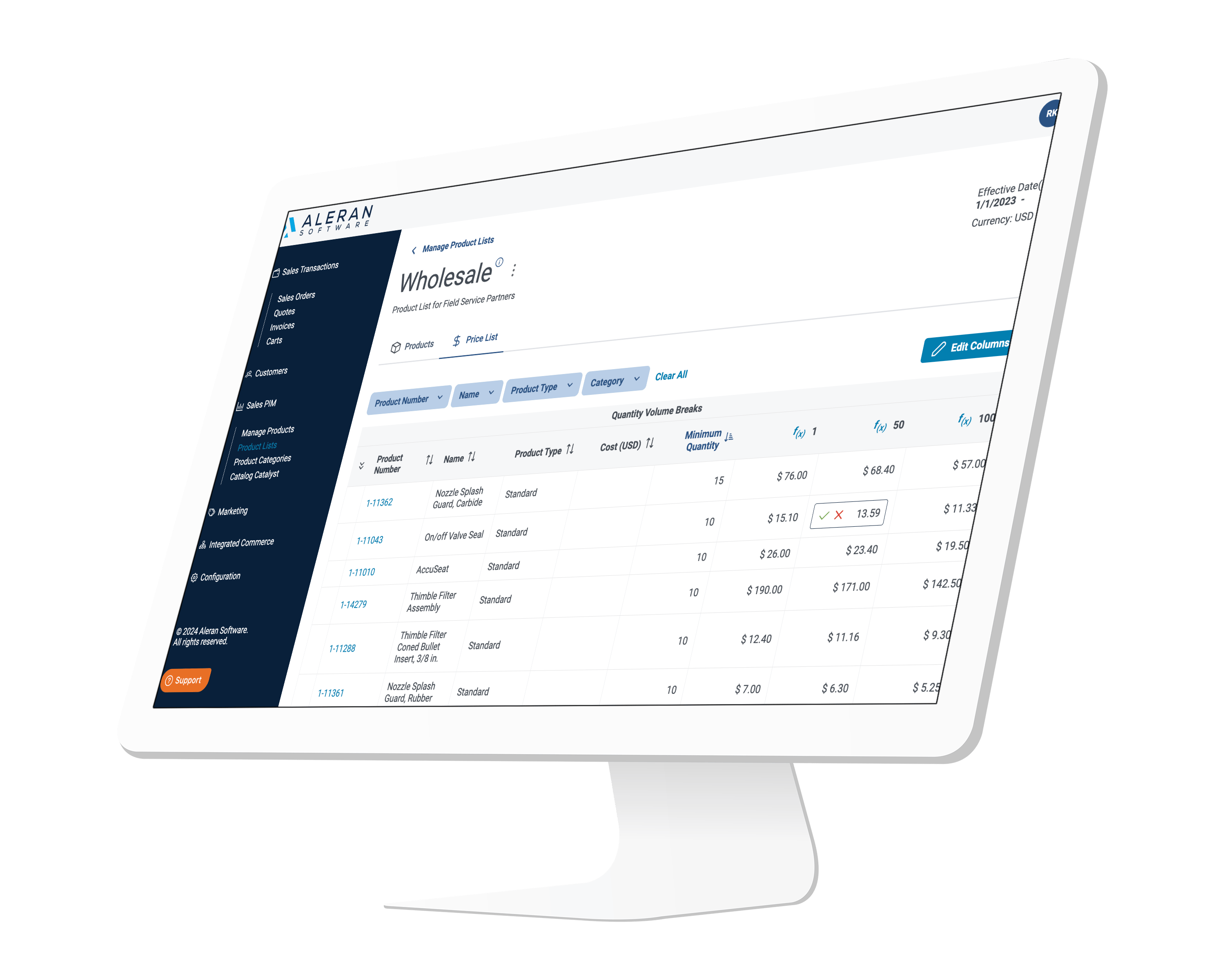
- Difficulty managing complex pricing
- Challenges supporting configure-to-order workflows
- Ecommerce platforms disconnected from ERP data
In many cases, manufacturers discover they do not simply need “ecommerce.”
They need a connected customer portal and commerce layer tied directly to ERP.
What Manufacturers Need From Epicor Commerce Alternatives in 2026
Manufacturing buying experiences have changed significantly.
Customers, dealers, and distributors increasingly expect:
- Real-time pricing
- Self-service ordering
- Order visibility
- Reordering from history
- Product configuration
- Faster quote turnaround
- Mobile-friendly experiences
- Personalized recommendations
As a result, manufacturers evaluating Epicor Commerce alternatives should look beyond storefront functionality alone.
The right platform should support the full quote-to-order-to-service lifecycle.
1. ERP-Connected Customer Portals
Modern manufacturers increasingly need portals — not just eCommerce websites.
A manufacturing customer portal should support:
- Account visibility
- Order tracking
- Invoice access
- Reordering
- Customer-specific pricing
- Dealer self-service
- Service workflows
- Sales-assisted buying experiences
Most importantly, the platform should remain connected directly to Epicor ERP so data stays synchronized across pricing, orders, inventory, and customer records.
2. Configure-to-Quote (CPQ) for Manufacturing Complexity
Many manufacturers sell configurable or engineered products.
That requires more than a basic cart experience.
Epicor Commerce alternatives should support:
- Configure-to-quote workflows
- Guided selling
- Complex product rules
- Customer-specific configurations
- Approval workflows
- Sales-assisted quoting
- Quote-to-order conversion
Manufacturers should also evaluate how tightly CPQ workflows integrate back into Epicor Kinetic and operational processes.
3. Dealer and Distributor Self-Service
Dealer and distributor channels remain one of the most overlooked areas in manufacturing commerce.
Many manufacturers still rely heavily on:
- phone calls
- PDFs
- spreadsheets
- manual order entry
- disconnected communication
Modern dealer portals can help manufacturers:
- Reduce CSR workload
- Improve dealer adoption
- Accelerate ordering
- Improve pricing visibility
- Support channel growth
This is increasingly becoming a competitive differentiator in manufacturing industries where channel relationships drive revenue.
4. AI-Guided Selling and Recommendations
Manufacturers are also beginning to evaluate how AI can support:
- Product recommendations
- Frequently bought together suggestions
- Guided configuration
- Customer-specific recommendations
- Faster sales onboarding
- Improved quoting accuracy
As AI-driven buying experiences evolve, disconnected commerce systems become increasingly difficult to maintain.
Manufacturers should evaluate whether potential alternatives can support future AI initiatives while remaining connected to ERP data.
5. Faster Time-to-Value Without ERP Replacement
One of the biggest misconceptions in manufacturing modernization is that companies must replace ERP systems before improving customer experience.
In reality, many manufacturers are prioritizing:
- ERP extension over ERP replacement
- Faster implementation timelines
- Lower operational risk
- Reduced integration complexity
- Incremental modernization
That is why many manufacturers are evaluating ERP-connected commerce platforms that complement Epicor rather than replace it.
The Hidden Costs of Custom Manufacturing Portals
Some manufacturers initially consider building custom customer portals internally.
While custom development may appear flexible upfront, manufacturers often underestimate:
- Long-term maintenance costs
- Integration complexity
- Duplicate business logic
- Upgrade dependencies
- Security management
- Technical debt
- Resource constraints
Over time, many internally developed portals become difficult to scale and expensive to maintain.
That is especially true when pricing, quoting, inventory, and customer workflows must remain synchronized with ERP systems.
What to Evaluate Before Choosing an Epicor Commerce Alternative
Manufacturers evaluating alternatives should consider several factors beyond basic ecommerce functionality.
ERP Integration Approach
How tightly does the platform connect to Epicor Kinetic and operational workflows?
Manufacturing Complexity Support
Can the platform support configure-to-order, complex pricing, and dealer workflows?
Customer and Dealer Experience
Does the platform improve self-service while maintaining sales-assisted capabilities where needed?
Scalability
Can the solution evolve alongside future AI, portal, and commerce initiatives?
Implementation and Operational Risk
How much custom development and ongoing IT support are required?
The Shift Toward Portal-First Manufacturing Commerce
Manufacturers are increasingly moving beyond standalone ecommerce toward broader customer portal strategies.
That shift includes:
- ERP-connected self-service
- Dealer enablement
- Configure-to-quote
- AI-guided selling
- Account-based experiences
- Service and reorder workflows
In many organizations, the customer portal is becoming the operational front-end for the entire customer lifecycle.
Final Thoughts
For manufacturers evaluating Epicor Commerce (ECC) alternatives in 2026, the decision is becoming less about storefronts and more about connected customer experiences.
The most successful manufacturers are focusing on platforms that:
- Extend ERP investments
- Support manufacturing complexity
- Improve dealer and customer self-service
- Accelerate quote-to-order workflows
- Reduce operational friction
- Create a foundation for AI-assisted commerce
The goal is not replacing ERP.
It is modernizing how customers buy around it.
Let’s Talk
If you’re considering how to change how you quote and sell or how you deliver customer experience to your buyers, let’s connect.
👉 See how Aleran extends Epicor real time by scheduling time with us.
Related Resources
The manufacturers pulling ahead aren’t doing rip-and-replace projects. They’re modernizing incrementally—without disrupting operations.
Related reading: How to Integrate Epicor ERP with eCommerce Platforms: Best Practices for Manufacturers
Common FAQs
What are alternatives to Epicor Commerce Connect (ECC)?
Manufacturers often evaluate ERP-connected commerce platforms that support customer portals, CPQ, dealer self-service, and manufacturing-specific workflows.
Does Epicor support customer portals?
Epicor ERP can integrate with customer portal platforms that provide self-service ordering, account visibility, and dealer workflows.
What should manufacturers look for in Epicor ecommerce alternatives?
Manufacturers should evaluate ERP integration, manufacturing complexity support, dealer workflows, CPQ capabilities, scalability, and implementation risk.
Do manufacturers need to replace Epicor ERP to modernize commerce?
No. Many manufacturers modernize customer experience by extending Epicor with ERP-connected commerce and portal platforms.
What is the difference between a manufacturing portal and ecommerce?
Manufacturing portals often include quoting, dealer access, customer-specific pricing, account management, and service workflows beyond traditional ecommerce functionality.
